There’s a moment every reseller reaches. The spare room door no longer opens fully, the dining table is a packing bench, and someone in the house asks how long this is going on for. There’s a second moment worth watching for too: the day your sales pass £1,000 in a year.
That figure matters. It’s HMRC’s trading allowance, the point where a hobby that buys to sell has to be registered for Self Assessment. It counts sales, not profit. So if you’ve crossed it, you’re running a small business whether you meant to or not, and a small business needs somewhere to keep its stock.
Why does this happen so often in Ingleby Barwick?
Because the estate is built for it. Around 24,000 people live here in about 8,900 households, and more than one in five residents is under 16. That’s a lot of outgrown coats, bikes, prams and toys moving through a lot of garages.
It’s also a place where people are at home to do something about it. Close to three in ten workers here mainly work from home, against 22.5% across Stockton borough. A lunch break is long enough to list five items.
You’d be in good company if you took it further. Stockton-on-Tees borough has around 1,125 wholesale and retail business units, so buying and selling is hardly a fringe activity round here.
How do you know the stock has outgrown the house?
When finding an item takes longer than listing it. That’s the real test, and these are the signs that usually come with it:
- You’ve sold something and then spent twenty minutes hunting for it.
- You’re turning down good bulk buys because there’s nowhere to put them.
- Stock has reached a second room, the garage or the car boot.
- You’ve stopped photographing things properly because there’s no clear surface.
One of these is a busy month. Three is a storage problem.
What changes when the stock moves out?
The house goes back to being a house, and the selling gets quicker. The unit becomes the stockroom. Home keeps the parts of the job that need a kettle and good light.
The photography corner comes back. With the stock elsewhere, a spare-room corner with a plain wall and a lamp is all you need. Better photos sell faster.
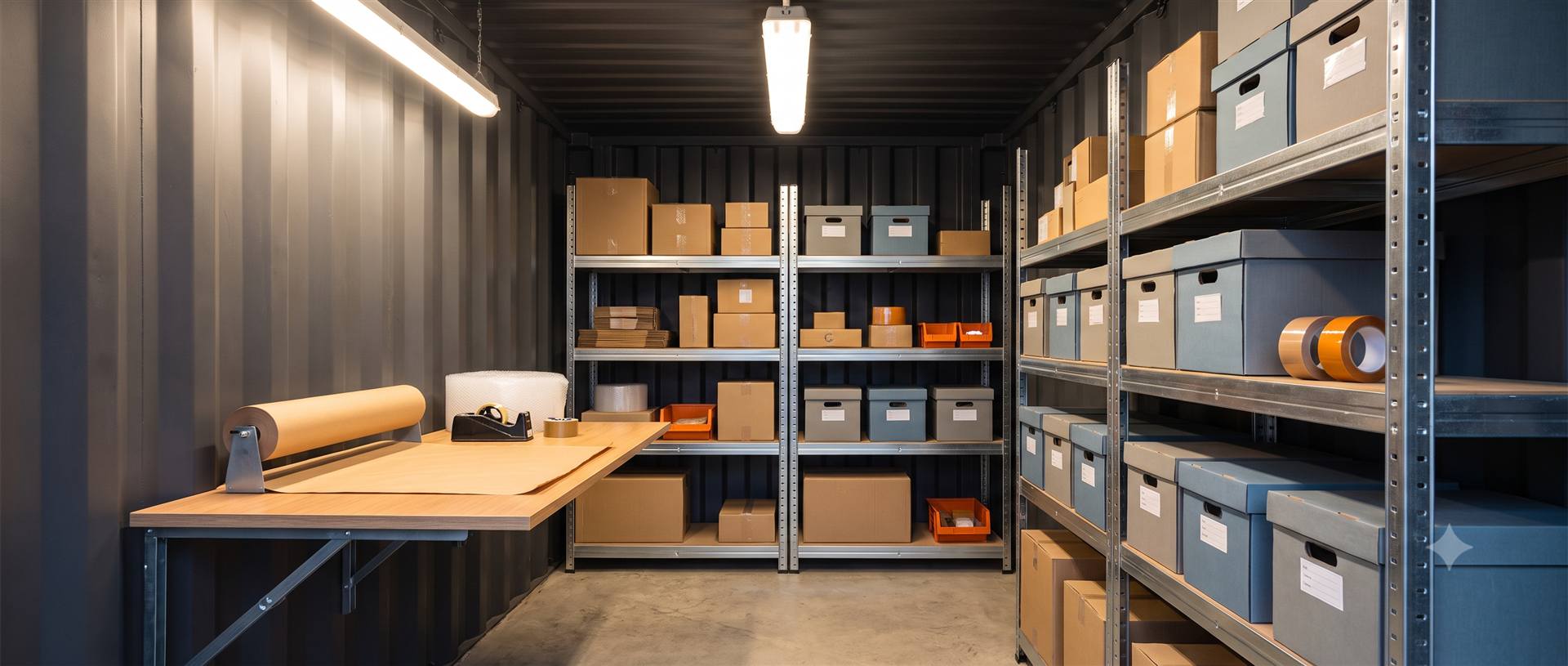
Stock gets rotated, not buried. Shelve it by category with the oldest at the front. Number the boxes and put the number in each listing’s private notes, so every sale is a two-minute pick.
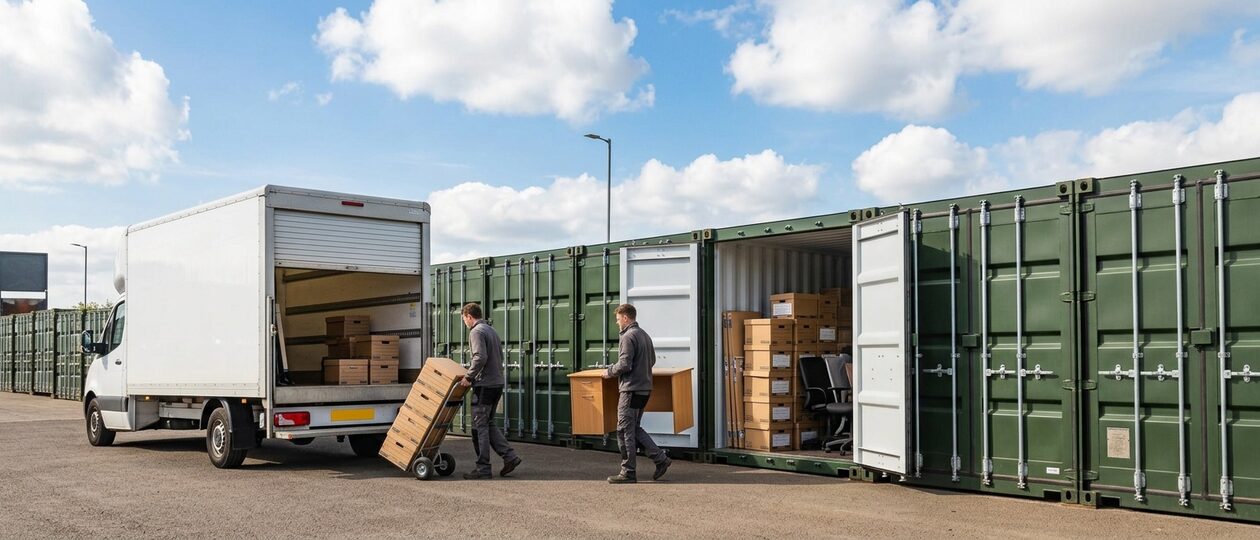
Parcels get staged at home. Bring back a week’s worth of likely sellers, pack at the table, and drop them off on the school run. The unit holds what hasn’t sold yet.
Which size fits which seller?
Most side hustles fit a 10ft container with room to spare. Here’s a guide.
| What you sell | Where it should live | Guide price (inc VAT) |
|---|---|---|
| A few bags of clothes on Vinted | The spare room, with a clothes rail | Nothing |
| A full Vinted or eBay wardrobe operation: rails, boxed shoes, packaging | 10ft container (large shed size) | £90 a month |
| Several platforms, or bulky things: furniture, bikes, prams, job lots | 20ft container (single garage size) | £118.80 a month |
Guide prices, checked 2 October 2026. Sizes and availability change from week to week, and not every size is offered at every site. For what's available today, with live prices, see the Ingleby Barwick page.
Leave yourself an aisle. A unit you can walk into is worth more than one filled to the door, and the size guide will help you judge it.
What can you actually do from a storage unit?
Store stock, and come and go when you like. That part is simple. Access is by personal PIN at the main gate, 24 hours a day, and the container is secured with a padlock you hold the key to, so evening and weekend sellers aren’t tied to office hours.
Working from the unit is a different question. Whether you can pack orders in there, plug anything in or have a courier meet you depends on the site, and we won’t promise it in an article. Check with the site before you plan on it.
The honest model is the one above: stock in the unit, photos and packing at home.
Does the maths work?
For most sellers who’ve reached this point, yes. Here’s an illustration, with made-up but realistic numbers.
Say each sale clears £7.50 after fees and postage. A 10ft container at £90 a month is paid for by 12 extra sales a month, or three a week. If getting the stock in order wins you back a couple of evenings of hunting and re-sorting, three more listings a week is not a stretch.
If your numbers are smaller than that, stay in the spare room a while longer. There’s no shame in a side hustle that fits in a wardrobe.
What comes after the side hustle?
If it keeps growing, the next questions are about lock-ups, leases and seasonal stock. We’ve covered that scaling-up stage in our guide to storage for Teesside’s small businesses and online sellers.
For now, the nearest unit to the estate is at our Ingleby Barwick site on Low Lane, within about ten minutes’ drive. All three iBOXED sites are pinned on the map below.