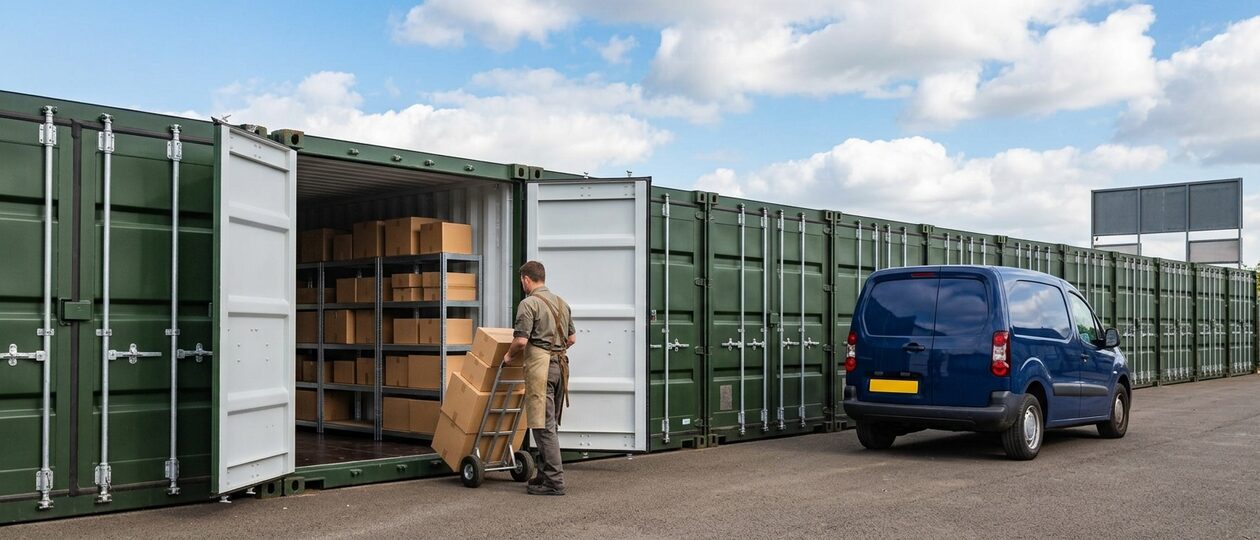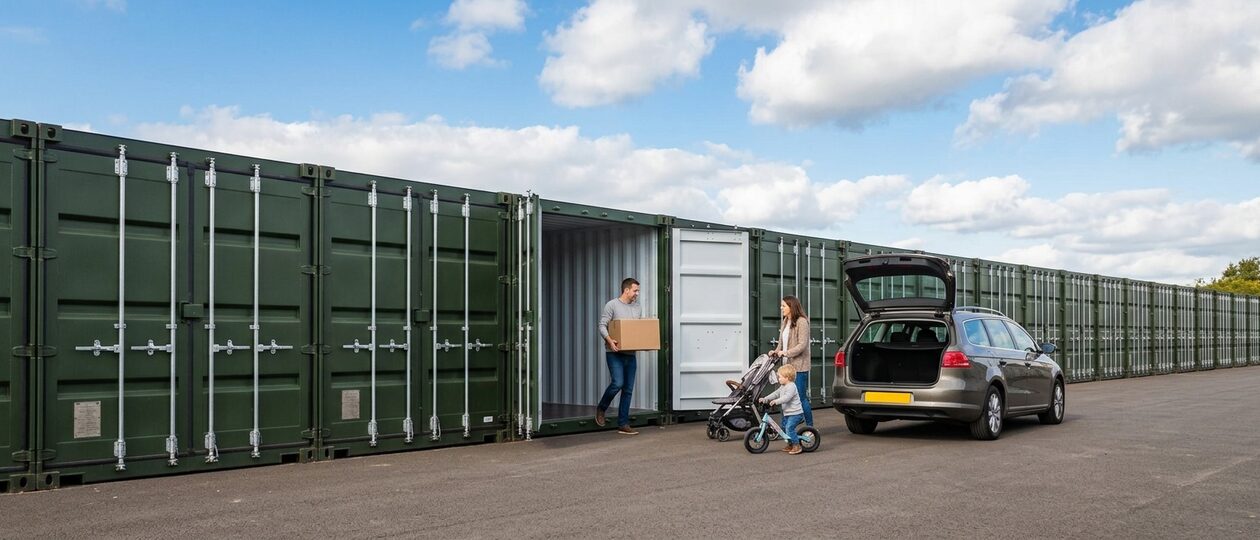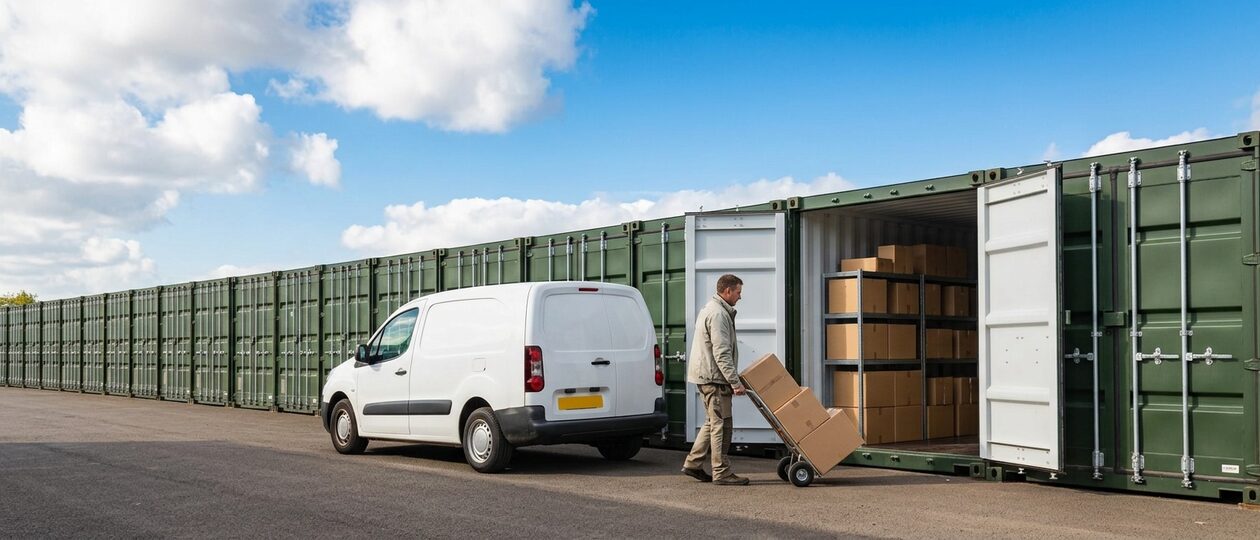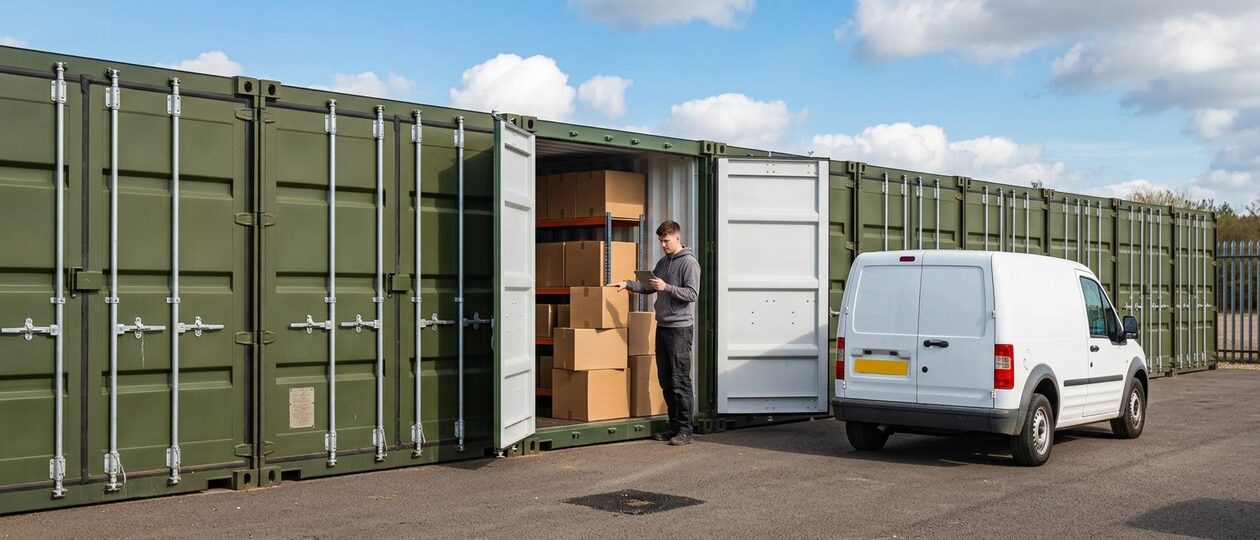
First, the number in the title. £21.65 per square foot is not what iBOXED charges. It is what self-storage operators across the North took in revenue per square foot of lettable space in the 2025 operating year, before VAT, according to the industry’s own annual report. The UK figure was £27.40.
A 20ft container on the Ingleby Barwick price list costs £118.80 a month including VAT, or £99 before it. Over the container’s nominal 160 square feet, that is about £7.43 per square foot a year, around a third of the regional index. That gap is the whole argument for why a product startup on the estate should price a container before it prices an office.
What is £21.65 per square foot actually?
An average spread across every square foot operators had to let, including the empty ones. Only 74.5% of UK storage space was occupied, so the figure is pulled down by space nobody was paying for. It is a fair way to compare one region with another and a poor guide to any one bill.
Teesside list prices sit below it. Our costs post works through the indoor units on the Redcar price list and lands between about £12 and £16 per square foot a year. Containers were left out of that table because they are sold by length, so here is the container sum on its own.
A standard 20ft container is 8ft wide outside, which gives the nominal 160 square feet. Inside, a UK supplier’s published dimensions are 6,010 mm by 2,340 mm, which is about 150 square feet of usable floor. On that floor the £99 becomes about £7.90 per square foot a year. Either way, a startup gets the space for a fraction of what the regional average suggests.
What does a startup actually need space for?
Stock, kit and tools. Not, in most cases, a desk.
Be honest about the hours. If you would sit in the premises for two hours a week and store things in it for the other 166, you are renting an office to use it as a cupboard. The laptop, the kettle and the video calls already have a home. What has run out of room is the pallet of product, the printer the size of a fridge and the boxes of packaging.
That is the question that decides this. Space to keep things in costs one price. Space to sit in costs another, and a lot of what an office charges for is the sitting.
The sum: a unit against an office and an industrial unit
A container is the only option in this table with a number next to it, and that is deliberate. We have no sourced figure for office or industrial rent on Teesside, and a made-up one would be worse than none. What we can do is list what each option charges for.
| 20ft storage container | Serviced office | Small industrial unit | |
|---|---|---|---|
| Monthly cost | £118.80 inc VAT | Ask a local agent | Ask a local agent |
| Per sq ft per year | About £7.43 (nominal 160 sq ft, before VAT) | Quoted per sq ft, before rates and service charge | Quoted per sq ft, before rates |
| Minimum term | One month | Often a rolling licence, usually with notice | A lease, often several years |
| Business rates | None to the customer | Usually included in the licence fee | Payable by the tenant |
| Service charge, deposit, fit-out | None | Service charge usually included; deposit common | Deposit, repairs and fit-out on the tenant |
| What you get | Dry, lockable space; 24-hour access by PIN | A desk, reception, meeting rooms, broadband | An empty shell with a roller door |
Guide prices, checked 2 October 2026. Sizes and availability change from week to week, and not every size is offered at every site. For what's available today, with live prices, see the Ingleby Barwick, Stockton (Preston Farm) and Redcar pages.
The lines that matter are the three under the price. Business rates, service charges and deposits are where a cheap-looking headline rent grows, and the lease term is where a startup gets stuck paying for a year it did not need. A container has none of those: one price, one month at a time.
What can you do from a unit, and what can’t you?
You can work inside it. Picking stock, packing orders and pricing up a delivery are all fine, so the unit can be the stockroom where the stockroom work happens. Access is by personal PIN at the main gate, 24 hours a day, with 24-hour CCTV, and the container is secured with a high-security padlock, and you hold the key.
What a unit is not is an office or a shop. Do not plan on customers walking in, staff clocking on, or a desk-based day inside it. We say nothing here about power or lighting inside a unit, so do not assume either.
One rule to build your routine around: you must be on site to let a courier, removals firm or contractor in and to receive any goods. A delivery to an empty unit is not an option. Most sellers find the simplest pattern is the one in our side-hustle post: stock in the unit, parcels packed and dropped off on your own schedule.
Why Ingleby Barwick in particular?
Because the estate is built for home-started businesses. Around 24,000 people live here in about 8,900 households, and 85.3% of those households own their home. At the 2021 Census close to three in ten workers on the estate mainly worked from home, against 22.5% across the Stockton-on-Tees borough.
That is a lot of owner-occupied semis with a business in the garage and a car on the drive. The garage was never going to hold the business past its first good year.
The iBOXED site on Low Lane is on the estate’s doorstep. A founder can drop stock off before the school run and pick orders after tea, with no landlord, no lease and nothing to hand back but a padlock key.
When does a unit stop being enough?
When the business needs people in it, not just things. Three signs usually arrive together.
- You want to take on staff, and they need somewhere to be.
- Customers want to visit, collect or try things.
- The kit needs power that a domestic plug does not give, such as three-phase for machinery.
At that point you are shopping for a lease, and the money you did not spend on an office in year one is the deposit. Until then, a container does the job. Our Ingleby Barwick site on Low Lane lists the sizes and current prices, and all three iBOXED sites are pinned on the map below.