Ingleby Barwick is the place people across Teesside mean when they say “a nice estate”, and almost nobody publishes its numbers. Here they are, from a business with a site on the eastern edge of it.
The short version. A typical home sold for around £242,000 in the year to June 2026. 85% of households own their home, more than one in five residents is under 16, and three in ten workers work mainly from home. All 14 of the estate’s neighbourhoods rank in the least deprived 30% of England. It is young, settled and comfortable by any local measure. The catch is space inside the houses, and we come to that at the end.
What does your money buy in Ingleby Barwick?
A modern family house with a drive, almost without exception. A typical sale on the estate was around £242,000 in the year to June 2026, from 373 sales across its 14 neighbourhoods. By neighbourhood, the typical price runs from about £171,000 in the cheapest pocket to £340,000 in the dearest.
The estate has been built in phases since the first houses went up at Lowfields in the late 1970s, and it is still being built, so what you get for the money depends on the decade as much as the street. Its three broad parts look like this.
| Part of the estate | Typical sale price | Range by neighbourhood | Sales in the year |
|---|---|---|---|
| Ingleby Barwick North | £217,000 | £206,000 to £230,000 | 143 |
| Ingleby Barwick East (with Hilton) | £237,000 | £171,000 to £305,000 | 112 |
| Ingleby Barwick West and South | £276,000 | £190,000 to £340,000 | 118 |
| Whole estate | £242,000 | £171,000 to £340,000 | 373 |
Source: HM Land Registry, 12 months to Jun 2026. Sales-weighted typical prices by Census neighbourhood group, rounded to the nearest £1,000; the eastern group includes Hilton village.
The north is the most consistent part of the estate, with every neighbourhood between £206,000 and £230,000. The west and south have the largest houses and the widest spread, which is where the £340,000 sales sit.
Zoom out to Stockton-on-Tees borough and the picture gets cheaper, because the borough includes Victorian terraces and older estates that Ingleby Barwick does not. The average borough home cost about £170,000 in July 2026, up 3.0% on a year earlier, against roughly £293,000 across England.
| Property type | Stockton-on-Tees | England |
|---|---|---|
| Flat | £86,000 | £217,000 |
| Terraced | £128,000 | £247,000 |
| Semi-detached | £164,000 | £292,000 |
| Detached | £276,000 | £475,000 |
| All homes | £170,000 | £293,000 |
Source: UK House Price Index (HM Land Registry / ONS), July 2026. Average prices, rounded to the nearest £1,000.
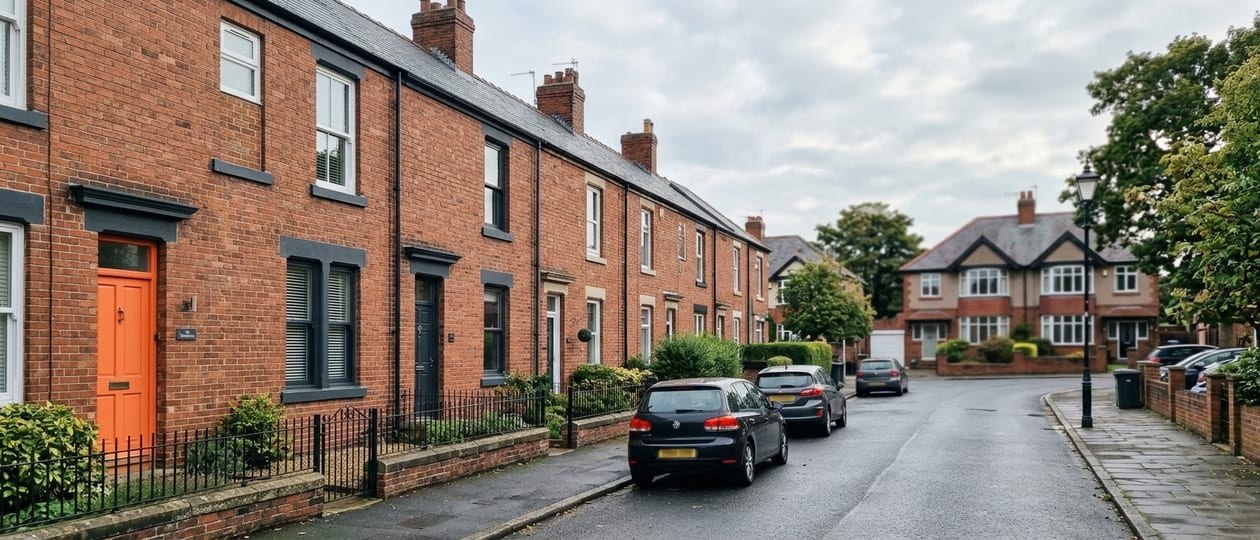
Ingleby Barwick is made of the bottom two rows of that table, semis and detached houses, with very few terraces and almost no flats. That is why the estate sits at the dear end of its borough. A detached house in Stockton still costs less than an average semi in England as a whole.
First-time buyers across the borough paid around £146,000 on average, about four times the median full-time wage of £37,558. The estate is mostly a second-move place: three- and four-bed family houses rather than starter flats, often bought by people trading up from Thornaby, Stockton or Middlesbrough.
What is renting like in Ingleby Barwick?
Rare, and quick to go. Only 13.5% of the estate’s 8,878 households rent privately, about 1,200 homes, and 1.2% rent from a council or housing association, around 100. If you want to try the estate before buying, expect a thin choice and be ready to move fast when a house comes up.
Borough-wide, the average private rent was £735 a month in August 2026, the highest of the three Teesside boroughs and about half the England figure of £1,459. By size that is roughly £668 for a 2-bed, £797 for a 3-bed and £1,166 for a 4-bed. Almost everything to let on the estate is a 3- or 4-bed house, so budget for the top half of that range.
Rents are 3.6% higher than a year ago, but they peaked at £738 in May 2026 and have settled since. That is a pause rather than a reversal, and we follow the whole series in our guide to Teesside rent trends.
Who lives here?
Families who own their house. The estate’s 14 neighbourhoods hold 24,070 people in 8,878 households. 21.5% of residents are under 16, about 5,200 children, against 18.4% across the borough. Only 11.3% are 65 or over, about 2,700 people, against 18.9% across the borough.
The official neighbourhood classification puts seven of the 14 under the label “Established Mature Families”, three under “Suburban Professionals” and the rest in the small-town suburban groups. In plain words: owner-occupiers with children, often two earners and two cars, in houses built after 1980.
Then deprivation, or the lack of it. All 14 neighbourhoods rank in the least deprived 30% of England on the 2025 official measure, and seven are in the least deprived tenth. Stockton-on-Tees borough has 124 neighbourhoods and 46 of them sit in that least-deprived 30%, so Ingleby Barwick alone supplies nearly a third of them. The measure says the estate is comfortable; it does not say it is dull.
Work and commutes
Three in ten workers on the estate work mainly from home, 29.9% against 22.5% across the borough. Two thirds drive to work, 65.8%, and just 2.2% walk. Only one in six, 16.7%, has a journey under 5 km, about half the borough rate of 29.6%.
So Ingleby Barwick is a place people leave each morning or do not leave at all. The work is in Stockton, Middlesbrough, the industrial sites along the river and, increasingly, the spare bedroom.
The roads were built for that. The A19 runs along the western side of the estate and the A66 is a short run north, so Stockton, Middlesbrough, Darlington and the A1 are all straightforward. We have written up what the numbers say about the borough as a whole.
The part other guides skip
Ingleby Barwick has one road network for 24,000 people, laid out in stages, so getting off the estate at half past eight on a school morning takes patience. Visit at school-run time before you buy, and again on a wet Tuesday in January.
Then there is the character question. The estate has long been reputed to be one of the largest private housing estates in Europe, built on farmland since the late 1970s, and it is what it is: modern, tidy and car-based. If you want a Victorian terrace, a pub on the corner and a station, you want Yarm or Stockton. If you want a cul-de-sac, a garden and a quiet night, you are in the right place.
The space audit: why estate houses fill up
Ingleby Barwick’s houses are generous by Teesside standards and still fill up, because they follow the modern pattern: a single garage a modern car barely fits, a trussed loft with no proper floor, and no cellar. Add the kit of a young family, a pushchair, two bikes, a trampoline in pieces for the winter, and the garage stops being a garage in the first year.
Home working makes it worse. With three in ten workers mainly at home, the spare room that used to swallow the overflow is now somebody’s office.
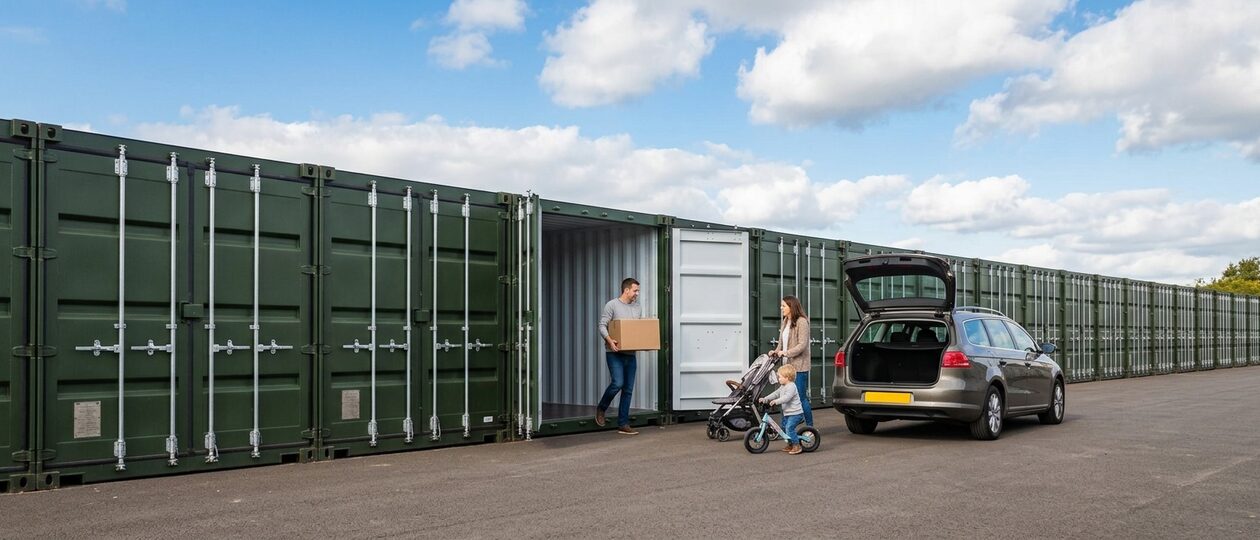
Moving up a size solves it at a price: a detached house averages about £112,000 more than a semi across the borough. If what you are short of is somewhere for the stuff rather than somewhere to sleep, storage is the smaller step.
| Unit | Roughly the size of | Guide price (inc VAT) |
|---|---|---|
| 10ft container | A large shed or small garage | £90 a month |
| 20ft container | A single garage | £118.80 a month |
Guide prices, checked 2 October 2026. Sizes and availability change from week to week, and not every size is offered at every site. For what's available today, with live prices, see the Ingleby Barwick, Stockton (Preston Farm) and Redcar pages.
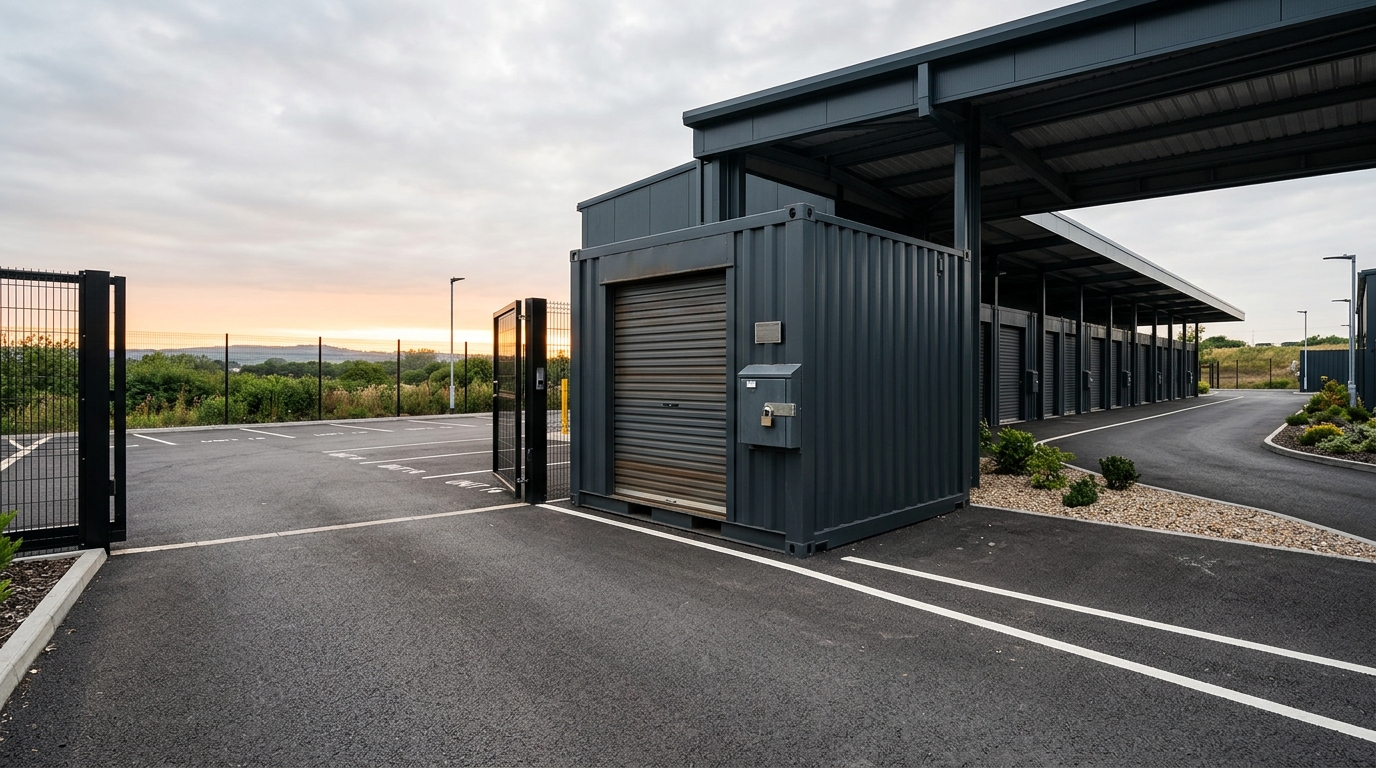
Our Ingleby Barwick site is on Low Lane, on the eastern edge of the estate, about five minutes from most of it. You get in with a personal PIN at the main gate, 24 hours a day, the site has 24-hour CCTV, and each container is secured with a high-security padlock, and you hold the key. The minimum term is one month. If a move is what you are planning, our guide to the gap between completion dates covers the storage side of buying on a growing estate. All three iBOXED sites are pinned on the map below.