Downsizing goes better when you sort one room at a time into four piles: keep, pass on, store, let go. The third pile matters most. It means no decision about a lifetime of belongings has to be made in the week the removal van is booked.
Plenty of Redcar households are facing this. At the last census, 23% of people in Redcar and Cleveland were aged 65 or over, against 18% across England. That’s the oldest age profile of Teesside’s three boroughs, and it means a lot of family homes with more rooms than people.
Downsizing in Redcar and Cleveland, in numbers
Nearly two in three households here own their home, a little above the England and Wales figure of 63%. So for most downsizers the house is the main asset, and its sale sets the timetable.
The average home in the borough cost around £151,000 in July 2026. That’s a borough-wide average, so individual streets and house types will sit well either side of it. Treat it as background. What your own home is worth, and what to do with the money, are questions for an estate agent, a solicitor and an independent financial adviser. This guide is about the belongings.
What is the four-pile rule?
Every item in the room goes into one of four piles, and nothing goes back on the shelf.
- Keep. It has a place in the new home. Measure that place first.
- Pass on. Family, friends, a charity shop. Ask people now, because “I thought you’d want it” is how lofts fill up again.
- Store. You want it, or someone might, but there’s no room and no decision yet.
- Let go. Recycle, sell or tip.
The store pile is the one that saves family arguments. Mum’s dining table, Dad’s tools, the boxes of photographs nobody has gone through: these are the things people fall out over when a decision is forced by a completion date. Put them somewhere safe and decide in the spring.
It only works with a rule attached. Give the store pile a review date, and write on each box who it might be for.
Room by room: where to start and what to decide
Start with the rooms you live in least. They hold the most forgotten things and the fewest daily needs, so you build momentum before you reach the kitchen.
| Room | Start with | Usually kept | Often stored | Let go |
|---|---|---|---|---|
| Loft | Boxes not opened in five years | Photographs, family papers | Christmas decorations, children’s keepsakes | Empty boxes, old paint, broken luggage |
| Spare room | The wardrobe | One set of guest bedding | The spare bed, if family still visit | Duplicate linen, clothes that no longer fit |
| Garage | Tools and garden kit | A basic toolkit | Good tools promised to someone | Anything rusted, seized or half empty |
| Living room | Large furniture, against the new floor plan | The chair you sit in every day | The dresser, bookcases, inherited pieces | The second sofa |
| Kitchen | Cupboards, top shelf down | Everyday crockery and pans | The best china and glassware | Gadgets, chipped sets, the fourth casserole dish |
A few notes on working through it. The loft takes longest, so give it a weekend of its own and somebody to carry. In the garage, be honest about the tools: a smaller home rarely has a workshop, and a grandson setting up his first house may want them more than a shelf does.
Leave the kitchen until last. You’ll be using it until the day you move, and by then you’ll have had four rooms of practice.
What deserves extra care: heirlooms and paperwork
Wood, fabric, paper and photographs are the things damp gets to first, and on this coast damp is the main risk to anything stored. That goes for a garage or a relative’s shed as much as anywhere else.
So pack heirlooms as if they’ll be away for a year, even if you expect a month. Everything clean and bone dry. Furniture off the floor and under breathable covers, never polythene. Photographs and papers in lidded boxes with a moisture trap. Our guide to storing things safely in Redcar’s sea air has the full checklist.
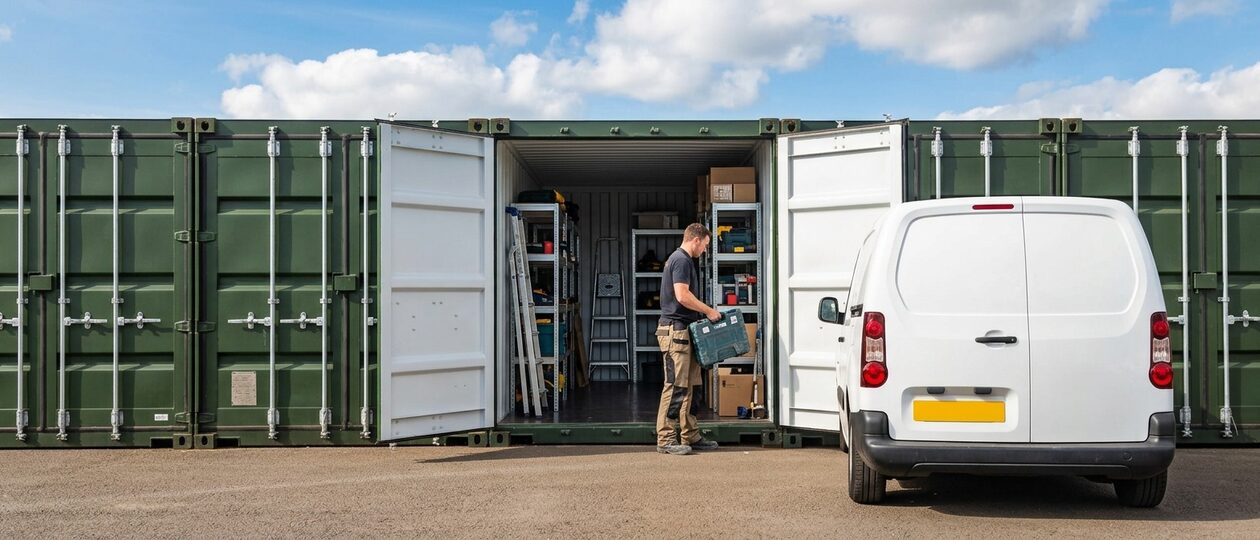
Storage comes as outdoor containers and, at some sites, internal units inside a building. If you’re putting away antique furniture, paintings or a family archive, tell the site what it is and ask which they’d put it in. Check your insurance covers it while it’s there, too.
Current paperwork is different. Wills, deeds, passports and pension letters stay with you, in one labelled box.
How do you time it with the sale?
Start sorting before the house goes on the market, and don’t try to finish by completion day. A sale can sit quietly for months and then need you out in a fortnight. The sorting you’ve done by then is what you have.
That’s the honest case for a storage unit when downsizing. It turns “decide by Friday” into “decide by Easter”. The store pile moves out early, which also makes the house easier to show, and the new place isn’t lined with boxes on day one.
As a guide to cost, these are the sizes on the Redcar price list:
| Unit | Roughly the size of | Per month (inc. VAT) |
|---|---|---|
| 10 ft Container | Small Garage / Large Shed | £90.00 |
| 20 ft Container | Size of a Single Garage | £118.80 |
| 90 sq ft Internal (First Floor) | One Bedroom Apartment | £130.00 |
| 90 sq ft Internal | Small Garage / Large Shed | £140.00 |
| 96 sq ft Internal | Two Bedroom Flat | £150.00 |
| 108 sq ft Internal | Single Garage | £160.00 |
| 135 sq ft Internal (First Floor) | Large single garage or 7 tonne lorry; contents of a large 2-bed or small 3-bed house | £160.00 |
| 135 sq ft Internal | Large single garage or 7 tonne lorry; contents of a large 2-bed or small 3-bed house | £160.00 |
iBOXED Redcar price list, checked 2026-10-02; see current availability on the Redcar units page.
Guide prices, checked 2 October 2026. Sizes and availability change from week to week, and not every size is offered at every site. For what's available today, with live prices, see the Redcar, Ingleby Barwick and Stockton (Preston Farm) pages.
A 20ft container, the size of a single garage, is £118.80 a month and is the one size offered at all three iBOXED sites. If you’re not sure how much space a store pile needs, the size guide works it through, and our decluttering guide helps shrink the pile first.
Storage near Redcar
Our Redcar site is at 14 Limerick Road, TS10 5JU. Access is by personal PIN at the main gate, 24 hours a day. Each container is secured with a high-security padlock, and you hold the key. All three iBOXED sites are pinned on the map below. If you’d like to talk through what you’re storing before you commit to anything, get in touch and we’ll give you a straight answer on size.