.png "iBOXED")

Decluttering advice fails at the same point every time: not the sorting, the leaving. Anyone can fill four boxes. The pile then sits in the hall for six weeks because nobody answered the real question.
Where does it all actually go? Here’s the method and the exits.
The method: one room, four boxes
Keep. Donate. Sell. Recycle. One room per session, every item into a box, no “later” pile. Later is how the garage got like this.
Two rules do the heavy lifting:
- The year test. Didn’t use it in the last year? It goes in one of the other three boxes. Seasonal kit gets a pass; “might come in handy” does not.
- Book the exits first. Arrange the charity collection and check your tip’s booking rules before you start. A booked collection is a deadline. A good intention is a pile.
Room by room, in the right order
Start with the garage or shed. It’s mostly rust, empty tins and hose fittings for a hose you no longer own, so it builds momentum without emotional decisions. Then the kitchen: duplicate utensils, the appliance graveyard cupboard, mugs beyond the household’s mug-carrying capacity.
Then wardrobes: if it didn’t fit last summer either, it’s a donation. The loft comes last. It’s the emotional one (photos, children’s things, inherited boxes), and you’ll handle it better with three rooms of practice behind you.
Where it all goes in Teesside
Donations. National charity furniture collections cover TS postcodes and book online; upholstered pieces need their fire-safety labels. Smaller items go furthest at local charity shops, which always need stock in January and after summer clear-outs.
Recycling and the tip. Each borough runs its own household waste recycling centres, and the rules (booking, ID, van access) genuinely differ. Check middlesbrough.gov.uk, redcar-cleveland.gov.uk or stockton.gov.uk before loading the car. All three councils also run bulky-waste collections for a fee if you can’t transport things yourself.
Selling. Local collection-only listings shift furniture fastest. Price it to be collected this week, not to reflect what you paid. If it hasn’t sold in a fortnight, it was a donation all along.
The can’t-decide box (the honest bit)
Every declutter produces a fourth pile nobody admits to: things you can’t keep and can’t lose. The trick isn’t forcing the decision. It’s giving it a deadline somewhere that isn’t your house.
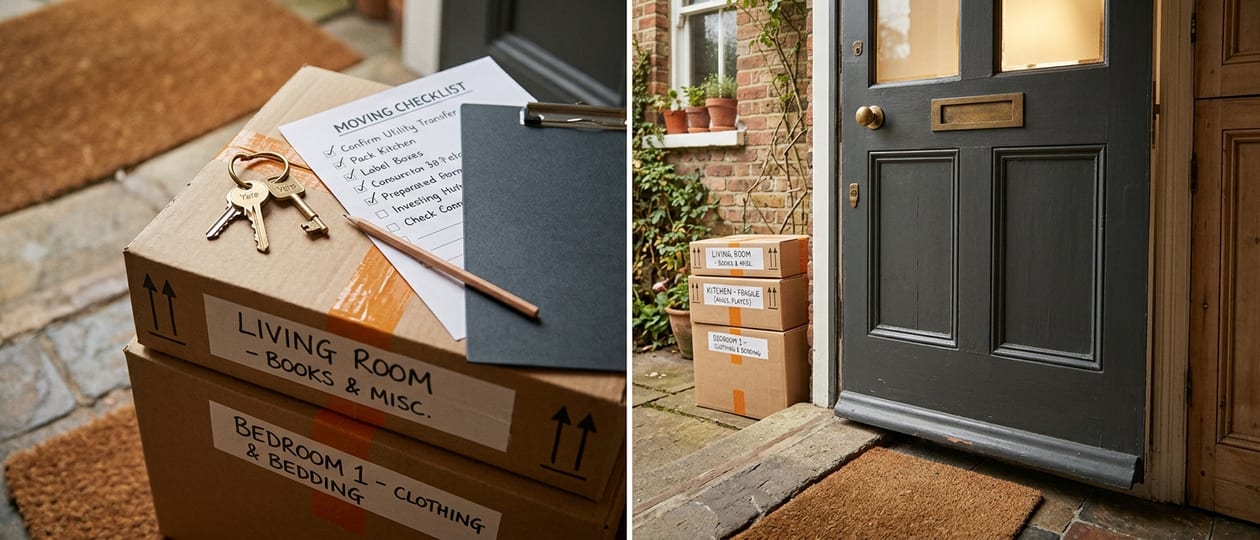
Box it, date it, put it in storage, and open the box in six months. What you haven’t missed, you let go. By then it’s an easy decision instead of a fight.
A small unit costs from £90 a month at iBOXED. For the transition months around a big clear-out (house sales, bereavements, downsizing), it’s the difference between deciding well and deciding fast. Just don’t let it become the loft with a padlock: the date on the box is the rule.
And once the keep-pile is defined, size it properly rather than guessing.
Keeping it decluttered
One in, one out. For every new thing, one thing leaves.
A seasonal swap twice a year (winter kit stored in summer, garden kit in winter) keeps the house running at living size. And the January rule: every Christmas decoration goes back in a labelled box, or next December starts with a treasure hunt.