Can a trampoline stay out all winter? The frame can, if it is anchored the way the maker says. The net, the pads and the mat should not. Across the North East there are about 60 nights of air frost a year on the regional average, the three winter months bring around 240 mm of rain, and on a coastal estate like Dormanstown the wind off the sea is what turns a 12ft trampoline into a kite.
Dormanstown is the newer end of Redcar, and that matters for where the kit goes. In the Dormanstown neighbourhood group, 26.2% of home sales since 2018 have been new-builds, against 9.4% across Redcar and Cleveland, and in one neighbourhood it was 55.2%. Newer estates mean neater gardens, a slim shed and often no garage. They also mean children: 18.2% of residents here are under 16, against 16.6% across the borough, so the gardens are full of play kit with nowhere to go when the clocks change.
Can a trampoline stay outside all winter?
It can, but you will not like what it looks like in March. An anchored frame survives a winter. The parts that do not are the ones that cost money to replace.
Frost gets at the springs. Water sits in the hooks, freezes and thaws through 60 or so frost nights, and the steel rusts where it was stretched. Wind gets at the net: a 12ft trampoline with the safety net up is a sail, and a winter gale off the sea will move or flip one that is not anchored. Salt air gets at everything metal, as our guide to damp and sea air in Redcar explains.
So the rule for a coastal estate: anchored frame and nothing else out, or the whole thing packed down. For most families the second is less work by spring.
How do you pack a trampoline down?
In the reverse order it went up, following the manufacturer’s manual, which is also the document for anchoring and safety. Most manuals run like this.
- Net and poles first. Unclip the net, slide the poles out of their sockets, roll the net around the poles and tie it.
- Pads next. The padded surround lifts off; wash it, dry it indoors, fold it.
- Mat and springs. Use the spring tool, work opposite sides to keep the tension even, and drop every spring into one bag. Count them. Roll the mat only when it is bone dry.
- Legs and frame. The legs pull out of the frame sections; bundle them with a strap and label the bundle.
The usual mistake is the mat. A damp mat rolled tight in November is a mildewed, stiff mat in March, so give it a day indoors first. The second mistake is losing the springs, which is why the bag gets a label and lives with the mat.
The rest of the garden
The same question applies to everything else out there, and the answers are not all the same.
| Item | Packs down to | Risk if left out | Where it can live |
|---|---|---|---|
| Trampoline (10ft to 12ft) | Rolled mat, bag of springs, bundle of legs, frame sections | Rusted springs, torn net, frame on the move in wind | Dry shed, garage, or a storage unit |
| Pop-up or folding goal | Flat frame and a bag of net | Net rots, pegs rust | Shed or under a bed |
| Plastic slide | Does not; some split into two halves | Fades, goes brittle, blows over | Shed, side passage, or leave out and wash it |
| Playhouse (plastic) | Flat panels if it was built from them | Fades and cracks, fills with wet leaves | Shed wall, garage, storage unit |
| Bikes and scooters | Front wheel off, bars turned | Chains rust, tyres crack | Hooked on a wall indoors or in a unit |
| Ride-ons and electric cars | Not much | Batteries and motors hate damp | Indoors, never a damp shed |
Guide only. Follow the manufacturer’s instructions for anything with a frame, an anchor or a battery.
Where does it all go on a newer estate?
Into whatever dry space the house has, which on a Dormanstown new-build is usually less than the garden needs. A slim shed takes the goal and the scooters. A garage, if there is one, takes the bikes and the slide, if the car is not in it. The loft hatch takes boxes but not frame sections, because new-build lofts are trussed and the hatch is small.
That leaves the trampoline, the playhouse panels and the bikes with nowhere, which is when families either leave it all out and hope, or find somewhere dry for five months.
A 10ft container for the winter
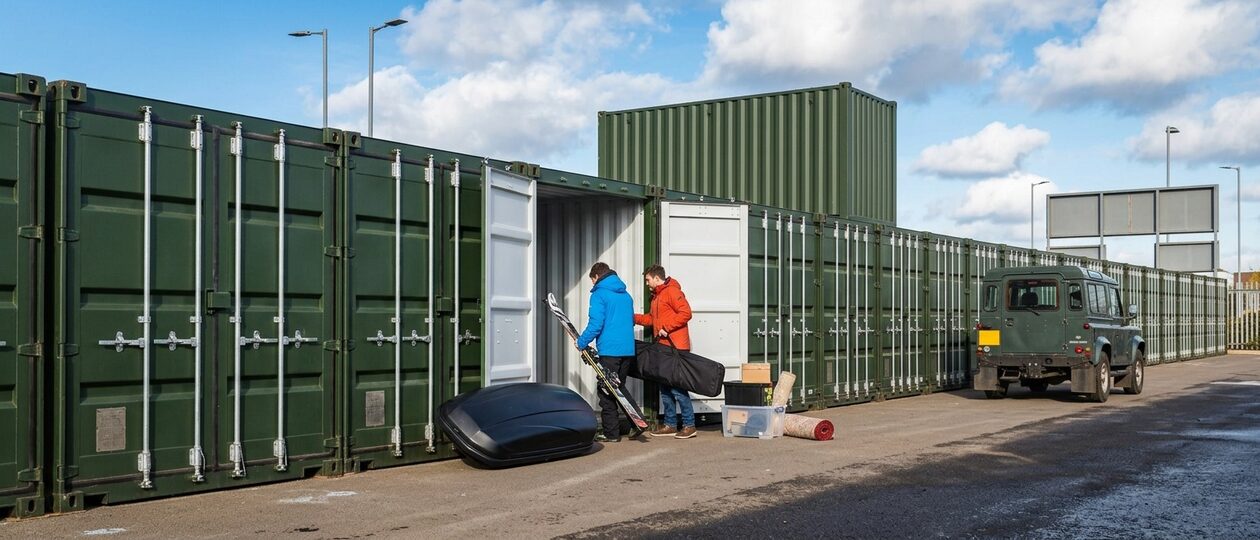
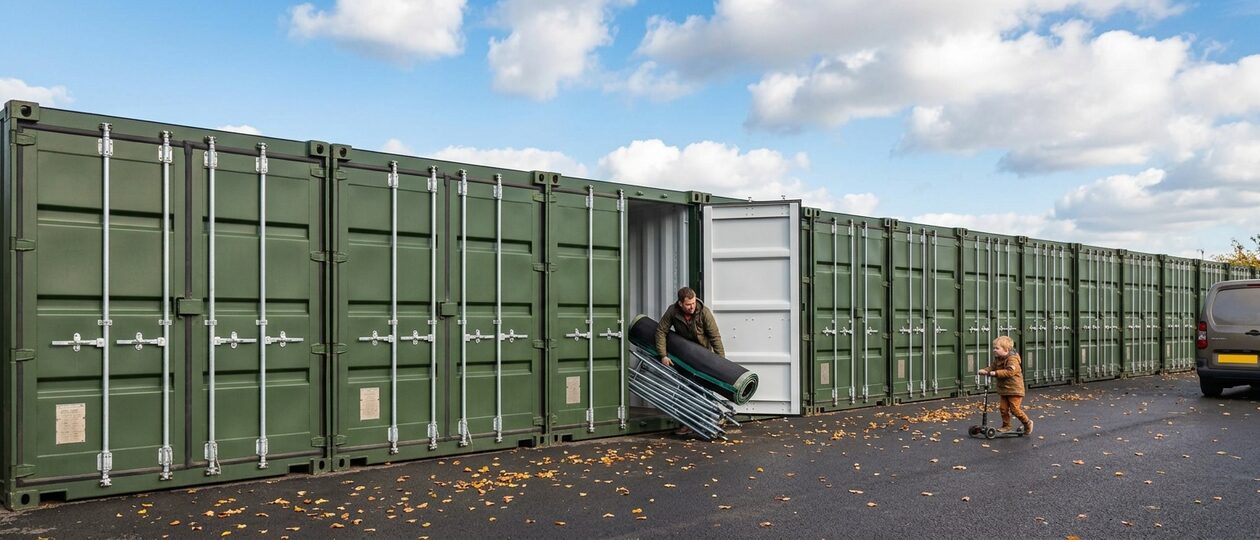
A dry container suits this kit better than a damp shed, because the things that fail over winter fail from wet, not cold. Galvanised steel, plastic and rubber come back in March the way they went in, if they went in dry.
As a guide, a 10ft container, about the size of a large shed, is £90 a month including VAT. November to March is five months, so around £450 for the winter. That takes a trampoline, a goal, a slide, a playhouse in panels and two bikes with room to walk in. A 20ft is only worth it if the garden furniture is coming too, which our garden furniture winter storage guide covers.
| Unit | Roughly the size of | Guide price (inc VAT) |
|---|---|---|
| 10ft container | A large shed or small garage | £90 a month |
| 20ft container | A single garage | £118.80 a month |
Guide prices, checked 2 October 2026. Sizes and availability change from week to week, and not every size is offered at every site. For what's available today, with live prices, see the Redcar, Ingleby Barwick and Stockton (Preston Farm) pages.
The minimum term is one month, so a winter rental can end when the garden is back in use. You get in with a personal PIN at the main gate, 24 hours a day, the site has 24-hour CCTV, and each container is secured with a high-security padlock, and you hold the key.
Bringing it back in March
Unpack in the order you packed, and look before you build. Check every spring hook for rust and replace any that have gone. Unroll the mat and check the stitching. Anchor the frame again as the manual says, and run the maker’s safety check before anyone bounces.
Our Redcar site is at 14 Limerick Road, on the Dormanstown side of Redcar, a few minutes from any of the estates. All three iBOXED sites are pinned on the map below.