Around 21,570 students study at Teesside University, in a borough of about 144,000 people, and a large share of them are international. Semester 1 runs from 28 September 2026 to 22 January 2027 with no reading week, so the winter break is the only pause before the January assessments.
That shapes the question. An international student in a rented room near the campus has no loft, no garage and no parent’s spare room, and three different breaks to plan for: a short winter break, a gap between tenancies, and the day they go home for good. Each has a different right answer.
| The break | How long | Best option | Rough cost |
|---|---|---|---|
| Winter break | Under three weeks | Leave it in your room, locked | Nothing |
| Tenancy gap | One or two months | A 10ft unit shared by housemates | About £30 each a month, three ways |
| Going home for good | Permanent | Ship only what beats replacing; sell or give away the rest | Shipping: usually well over £100 a box |
Source: iBOXED guide prices, checked 2 October 2026; shipping is a band from courier calculators, not a quote. Get two with your own route and weight.
The winter break: leave it, lock it, check your contract
Under three weeks is not long enough to move your life into a unit and back. The break runs from just before Christmas to the second week of January, and the university describes the dates as generic and subject to review, so check the current page before you book a flight.
If you are in Teesside University halls, the accommodation guide is plain: contracts run for 40, 45 or 50 weeks, so you can stay through Christmas and Easter, or go and leave your belongings in your room. Lock the door, take your passport, laptop and anything you could not bear to lose, and go.
In a private hall or a shared house, read the contract. Most run through the break too, but some private providers have rules about empty rooms, and a landlord may want to know the house is unoccupied. A storage unit for a three-week break is rarely worth £90. Say so to anyone who tells you otherwise.
The tenancy gap: one or two months, shared
This is where storage earns its place. A tenancy that ends in June and a new one that starts in September, or a halls contract that finishes before the next room is ready, leaves a gap of weeks or months with everything you own in boxes.
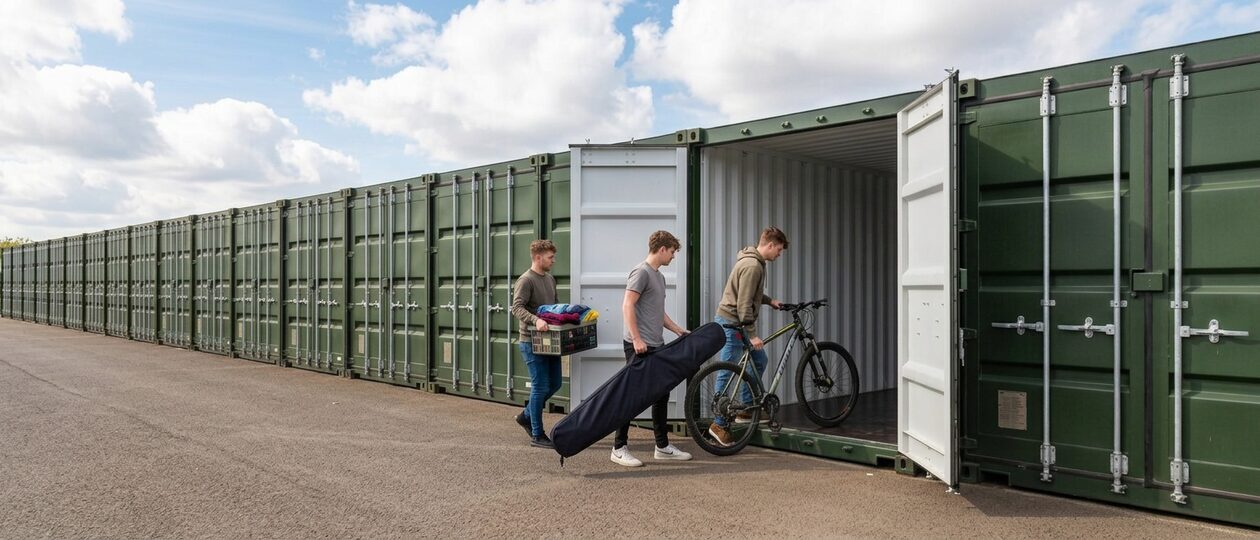
The choices are a friend’s floor, a courier round trip, or a unit. The floor costs a friendship. The round trip costs two international shipments and a month of wondering where the box is. A 10ft container is £90 a month including VAT and takes two or three rooms’ worth of boxes, so three housemates pay about £30 each a month.
| Unit | Roughly the size of | Guide price (inc VAT) |
|---|---|---|
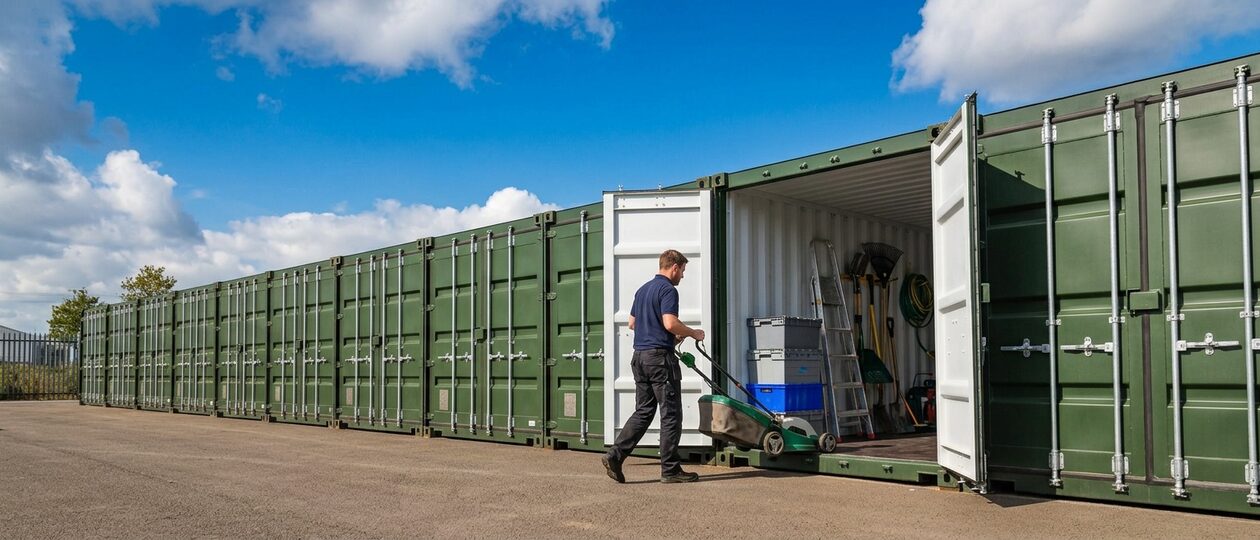
| 10ft container | A large shed or small garage | £90 a month |
| 20ft container | A single garage | £118.80 a month |
Guide prices, checked 2 October 2026. Sizes and availability change from week to week, and not every size is offered at every site. For what's available today, with live prices, see the Ingleby Barwick, Stockton (Preston Farm) and Redcar pages.
The minimum term is one month at every site, so a six-week gap is two months, not a year. Our summer student storage guide covers the long June-to-September gap in detail; the same unit does the same job for a winter one.
Going home for good: the ship-or-sell rule
Ship only what costs more to replace than to send. That is the whole rule, and it rules out most of a student room.
A heavy box of 20 to 30 kilograms sent overseas by a mainstream courier usually costs well over £100 once packaging and paperwork are added, and prices vary a lot by route and by how fast you want it. Put two quotes side by side with your own postcode and destination before you decide anything. Then check your home country’s customs rules, because used goods are not always duty-free on the way in.
Against that, a duvet, a set of pans and a desk lamp cost less to buy again than to post. Sell them to the next tenant, list them on a student group, or give them to a charity shop. Ship the things that are hard to replace: course books you will use, winter clothes that fit, anything with a story. Carry the documents.
What to store and how
Dry, boxed and labelled. The North East is damp, so this matters more here than it would at home.
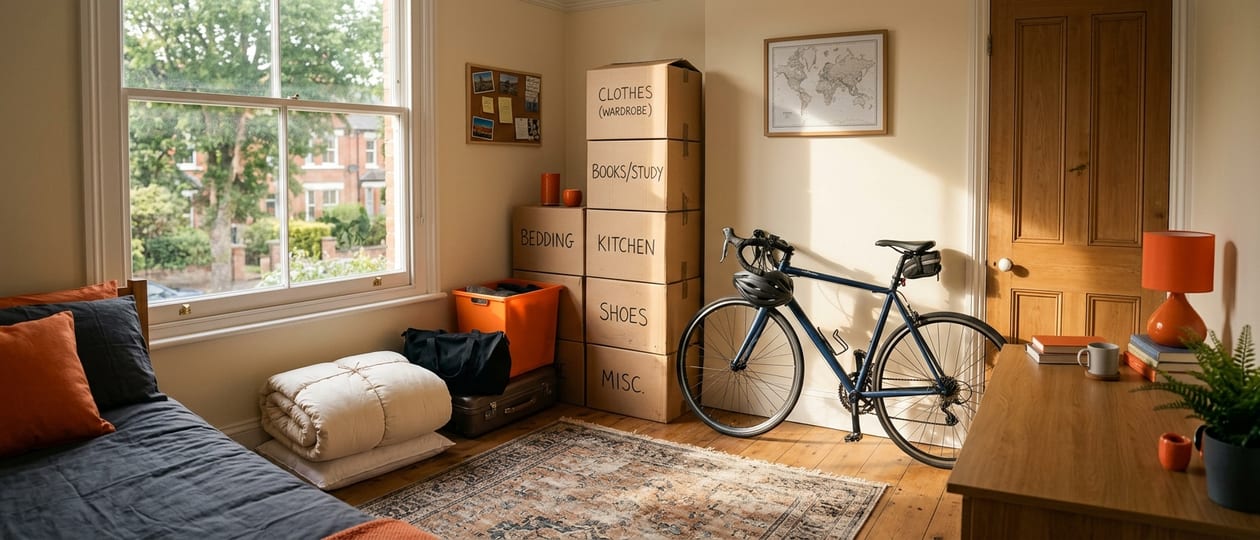
- Bedding and the winter coat. Wash, dry fully, then vacuum bags. They shrink to a quarter of the size and keep the damp out.
- Kitchen kit. Wrap the breakables in tea towels, box them, label the box “kitchen” and the owner’s name.
- Books. Small boxes only; a big box of books cannot be lifted. Rarely worth shipping, often worth storing for a term.
- The bike. Pump the tyres, oil the chain, and it stands at the back of the unit with the boxes in front.
- Not in the unit. Food, liquids that can leak, gas canisters, anything flammable, and anything living. Passport, laptop and medicines go with you.
Photograph everything as it goes in. If one of you needs something out in week three, the photo is how they find it.
Sharing a unit between housemates
A unit can be rented jointly by several named people, and the contract can move between you if one person leaves mid-term. You share the gate PIN, and the site can sell you extra keys for the unit padlock, so nobody is waiting on the one person with the key.
Still agree a list. One shared document with every box, whose it is and what is in it. Agree who pays what, and the date the unit is emptied, before anything goes in.
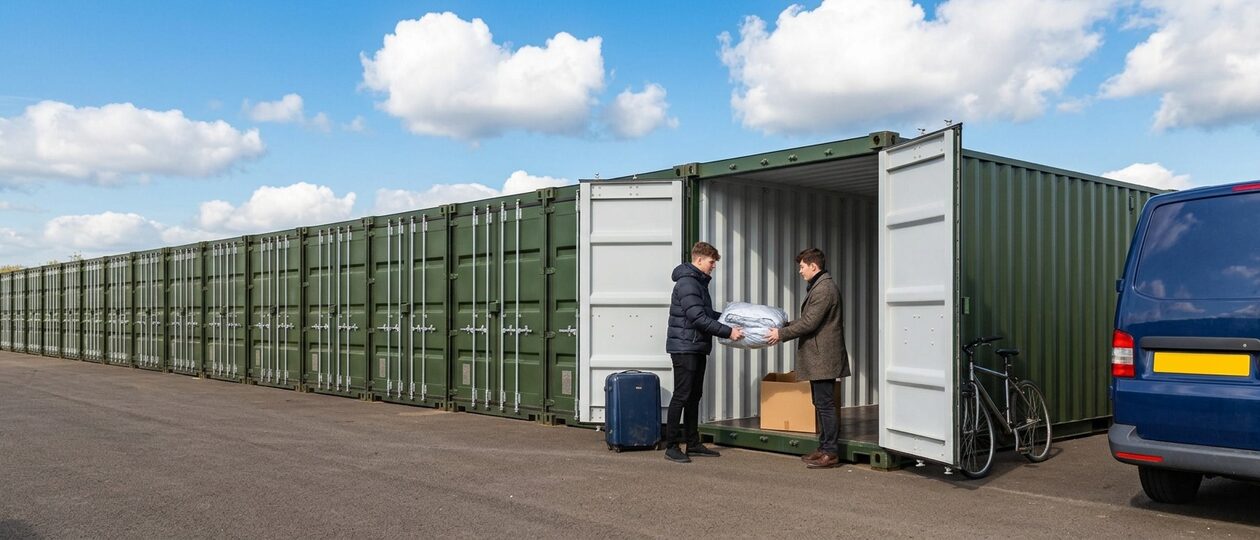
Two practical points. Ask the site what identification they need when you book, so there are no surprises at the gate. And if you are expecting a courier or a friend with a van, the renter must be on site to let them in and to receive anything; nobody can drop a box at an empty unit.
Access is by personal PIN at the main gate, 24 hours a day, with 24-hour CCTV, and the container is secured with a high-security padlock, and you hold the key. Our Ingleby Barwick site on Low Lane is within about 20 minutes’ drive of central Middlesbrough, and the size guide helps if three rooms’ worth is more than you thought. All three iBOXED sites are pinned on the map below.